2019 Real Estate Market Forecast
Is the real estate market headed into the tank again? Is there a bubble?
The market has changed, and there are several reasons why some people think the market is headed south:
Those things can breed uncertainty if not understood. Join Bret and Molly Chance as they look at the facts to shed some light on the topic and give some reassurance as to why it's not gloom and doom.
The recession of 2008 caused a housing shortage that we're still dealing with. The home builders greatly reduced the number of homes they were building. Real estate investors bought up the foreclosure inventory. And low interest rates of 2.5% caused homeowners to refinance and stay put. After the nation 'officially' came out of the recession in 2009, we began to see a major housing shortage across the nation. A classic case of supply and demand caused home values to increase rapidly. The rate of increase we've seen over the last several years is not sustainable for any market, and thus the cool down to a more normal and healthy real estate market.
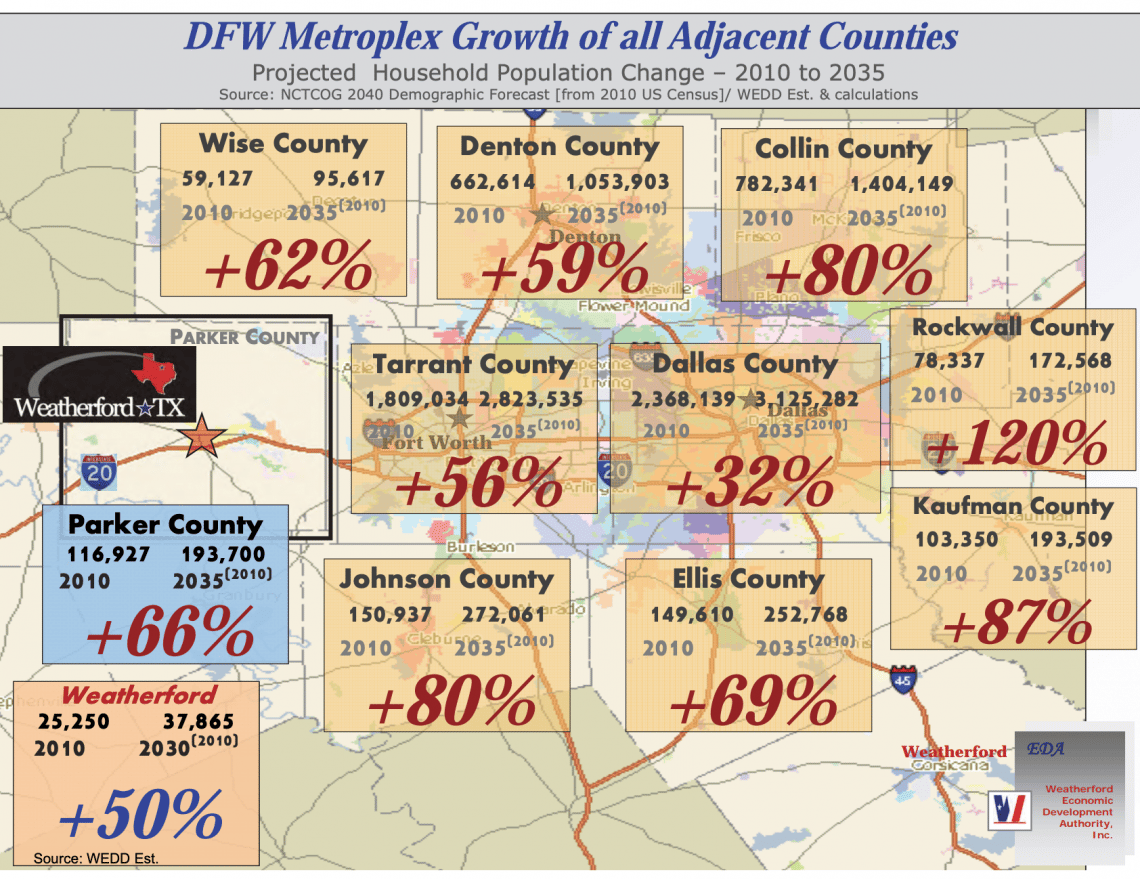
The new home builders are building again. It's helping to increase inventory, which is leveling out the need for more housing. However, because of the population and job growth in the DFW area, there is still a need for more housing. Based on the North Central Texas Council of Governments (NCTCOG) DFW population estimated growth for 2010-2035, it looks like we're not slowing down. Denton County has a projected growth of 59%, or a growth of 662,000-1 million plus people moving to the area.
You can see how that breaks down in their most recent report from April 2018. Much of this population growth is due to the increase in employment. According to the Bureau of Labor Statistics, the largest over-the-year employment increases occurred in Dallas-Fort Worth-Arlington, TX, with +116,400. (Metropolitan Area Employment and Unemployment Summary)
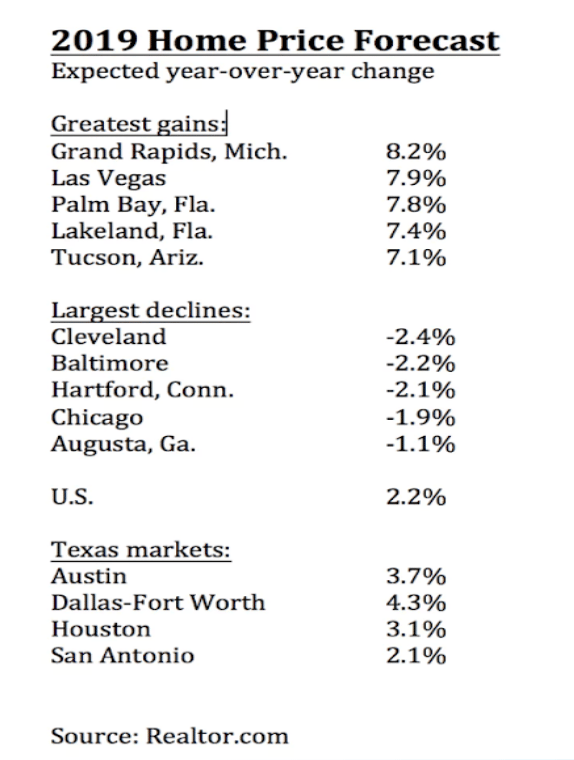
According to the forecast by Realtor.com, DFW-area home prices will grow by 4.3%. The rate of home appreciation in DFW is outpacing the nationwide home price forecast of 2.2% for 2019.
The projected interest rates vary from Fannie Mae's 5% up to the highest projected rate of 6%.
Rising home prices along with rising interest rates has an impact on the monthly payment. According to Realtor.com, "the average U.S. monthly mortgage payment has jumped 15.8%, or $223 per month, since last year." In September 2017, that number was $1,413, rising one year later to $1,636 based on a median price of $294,900.
Besides a strong job market, increased population projections, increased home price projections, and steady interest rates, there is another reason we're not seeing the real estate market headed into the tank. Credit requirements to get a home loan remain strong, unlike what we experienced leading up to the recession. The majority of those buying homes now have credit scores between 620-719, along with more proof they can actually purchase a home.
The media would like for people to believe that the housing boom is coming to an end. But even the graphics some use tell a story quite the opposite. You can't get the entire story from just a snapshot, which is why we've shared information from the main areas that would predict a downturn in the real estate market.
DFW Real Estate Market Updates
Home prices across Dallas-Fort Worth are holding steady, but there are fewer homes for sale and fewer homes selling than a year ago. Here's what August's numbers mean … Read more

DFW Real Estate Market Updates
Home prices are up 8.9% year over year, and there are more homes to choose from. Here's what August's numbers mean if you're buying or selling in Flower Mound.

We’re open, accessible, and always ready to help—whether you're exploring your options or ready to take the next step. Call, text, or email anytime.